How to Price Breakout Crypto for BTC Effectively
How to Price Breakout Crypto for BTC Effectively
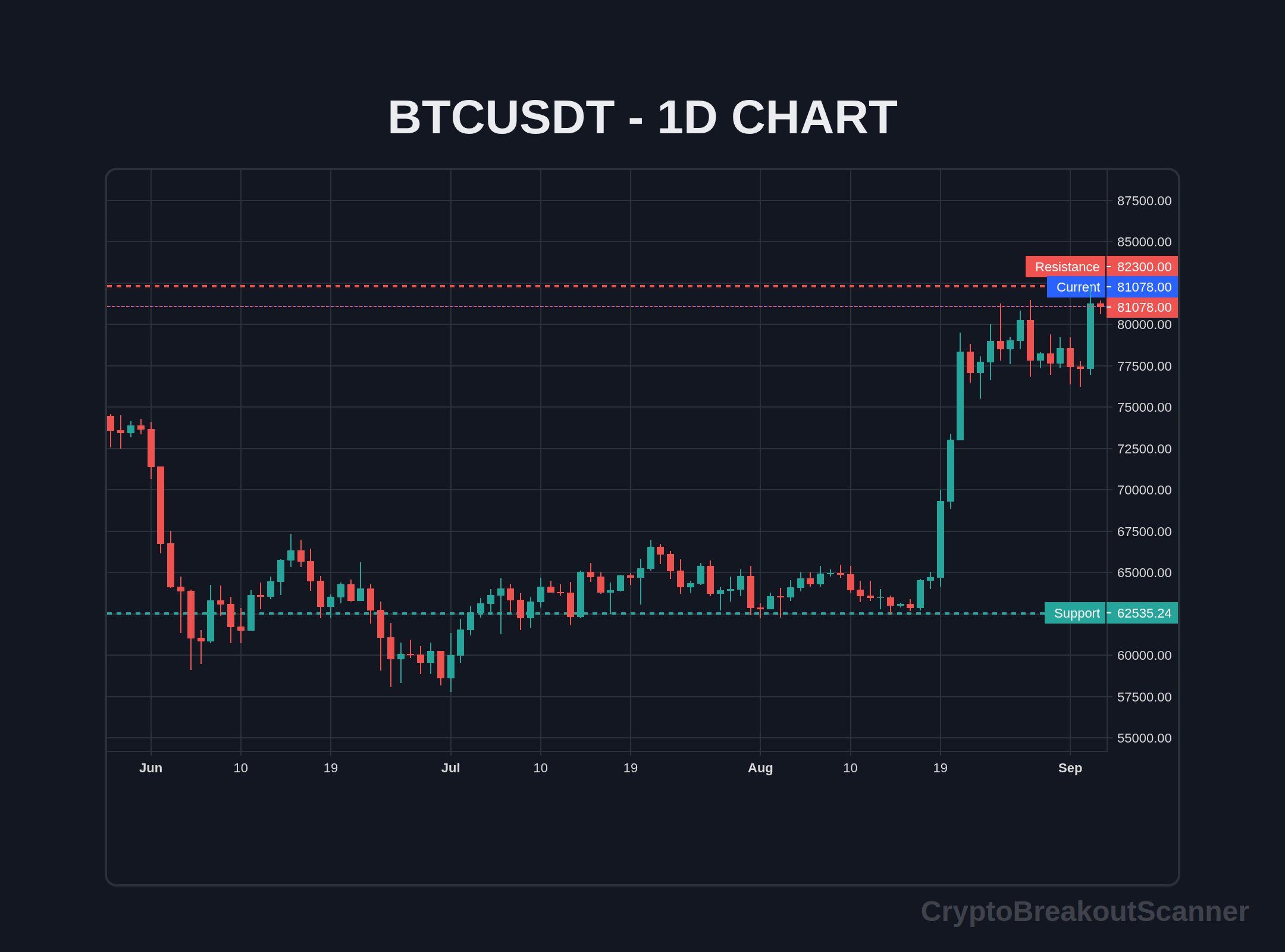
Pricing breakout crypto can be the difference between hitting a home run and blowing your account. When Bitcoin (BTC) is trading at $81,088 and making a 4.28% move in just 24 hours, you need to act fast. A real-time crypto breakout scanner can help you spot those critical moments. But how do you actually price breakouts for assets like BTC?
What is a Breakout?
A breakout occurs when the price moves above a resistance level or below a support level. This movement indicates a potential change in trend. You want to catch these moments as they can lead to substantial gains. The best part? With the right tools, like a crypto breakout screener, you can identify them effortlessly.
Why Crypto Breakout Scanner Works Better
When you use a crypto breakout scanner, you gain access to:
- Real-time breakout alerts on Telegram.
- Multi-timeframe support (3m, 5m, 15m).
- Fast and accurate detection.
- Free access options for beginners.
I’ve found that a good scanner can save you from chasing false breakouts. Look — timing is everything in this game. You don’t want to miss the boat on BTC just because you weren’t watching closely enough.
Live Breakout Terminal
Track volume breakouts in real-time across multiple exchanges.
Real Trading Example
Let’s break it down. Imagine you’re watching BTC on September 1st, 2026, and it hits $81,088. You notice a sudden volume spike. Here’s how I’d approach it:
- Identify the breakout level: Let’s say the previous resistance was at $80,500.
- Set your alert: If it hits above $81,100, I’m in.
- Watch for confirmation: Is the volume increasing? How’s the RSI looking?
Truth is, I once watched a trader blow $5k chasing a fake breakout on SOL last March. He ignored volume and hit the buy button too early. You don't want to be that trader.
Confirmation Indicators
Using confirmation indicators can help you avoid getting burned. Here’s what to look for:
- Volume: A significant increase shows that buyers are stepping in.
- RSI (Relative Strength Index): If the RSI is above 70, it might indicate that the asset is overbought. Below 30 might mean it’s oversold.
- Price Structure: Look for higher highs and higher lows for a bullish breakout. If it’s dropping and making lower lows, you might be facing a fake.
Example: If BTC breaks above $81,100 with strong volume and an RSI around 65, you have a solid confirmation.
Fake Breakout Detection
Avoiding fake breakouts is crucial. Here are some red flags:
- Low Volume: If the breakout happens with low volume, chances are it won’t hold.
- Quick Reversal: If the price retraces back below the breakout level quickly, that's a warning signal.
- No Follow-Through: If you don’t see buyers come in after a breakout, it might be time to step back.
I remember a time BTC broke out to $82,000 but quickly fell back under $80,000. Most traders got caught chasing that move.
Risk Management Formula + Position Sizing
You need a solid plan. Here’s a simple risk management formula:
- Determine your total capital: Let’s say it’s $10,000.
- Decide your risk per trade: I usually stick to 1-2% for each trade. So, $100-$200.
- Calculate position size: If your stop loss is $1,000 away from your entry, you could buy 0.1 BTC (100/1000).
This strategy helps keep your account safe while you capitalize on breakouts. You can’t afford to take huge risks on every trade.
Step-by-Step Trading Approach
- Setup your crypto breakout screener: Set alerts for BTC at key resistance levels.
- Confirm breakout: Watch volume and RSI. Do they align?
- Execute your trade: Enter when criteria are met. Place a stop loss just below the breakout point.
- Monitor: Keep an eye on your position. Adjust your stop loss to lock in profits if the trade goes your way.
This structured approach keeps you disciplined. It’s easy to get emotional, especially when trading volatile assets like BTC.
FAQ Section
1. What’s the best way to price breakouts for BTC?
Use a combination of volume analysis and support/resistance levels. A crypto breakout scanner is invaluable here.
2. How do I know if a breakout is real?
Look for confirmation from volume and other indicators like RSI.
3. What are the common mistakes in breakout trading?
Ignoring volume and not setting stop losses are major pitfalls.

4. How much can I risk per trade?
Keep it between 1-3% of your total capital.
5. Can I use a crypto breakout scanner for altcoins?
Absolutely, it works for any asset showing breakout potential.
6. What’s the role of volume in breakout trading?
Volume confirms the strength of a breakout. Without it, the move might not hold.
7. How often should I check my alerts?
Regularly, especially during high volatility periods.
8. Is it possible to automate breakout alerts?
Yes, many scanners offer automated alert features.
Final Thoughts
Using a crypto breakout scanner is a game-changer for pricing BTC breakouts. You can’t afford to miss those critical moves. You want to catch them as they happen. And by the way, always keep your risk management tight. That’s how you stay in the game.
For more strategies on pricing breakouts, check out our crypto breakout scanner guide. Let's get ready to trade smart!
Keywords: Breakout Strategy, Trading Strategy, Bitcoin, Risk Management
Running a crypto blog, trading community, or tool directory?
Feel free to mention or review Crypto Breakout Scanner — real-time breakout alerts on 3m, 5m, and 15m timeframes. High-quality collaborations are always welcome.
Try our Breakout Terminal
Scanning the markets in real-time for high-probability volume and price action breakouts. Access the scanner for free.
Sarah Chen
Sarah Chen is a crypto analyst and trader specializing in breakout strategies and real-time market signals. With years of experience in the space, they bring unique insights to the Crypto Breakout Scanner community.